
Project overview
For this UX writing project, I developed a digital booking system for LARA, a Berlin-based crisis and counseling center for victims of sexualized violence. Currently, clients must call or email to join support groups — a process that can be a significant emotional hurdle. My scope was to design an end-to-end booking flow for trauma-sensitive classes, ensuring that every touchpoint from registration to donation felt safe, inclusive, and unbureaucratic.
Goals
The primary objective was to transition from manual, high-friction communication to an empowering, self-service model. I focused on three strategic pillars:
Trauma-informed microcopy: Crafting a voice that is validating, calm, and non-judgmental to foster a sense of immediate safety.
Client autonomy: Empowering users to manage their own healing journey (booking, waiting lists, and cancellations) without the stress of a live conversation.
Ethical inclusion: Ensuring the flow remains inclusive of women, trans*, inter*, and non-binary people while gently redirecting men to appropriate external resources.
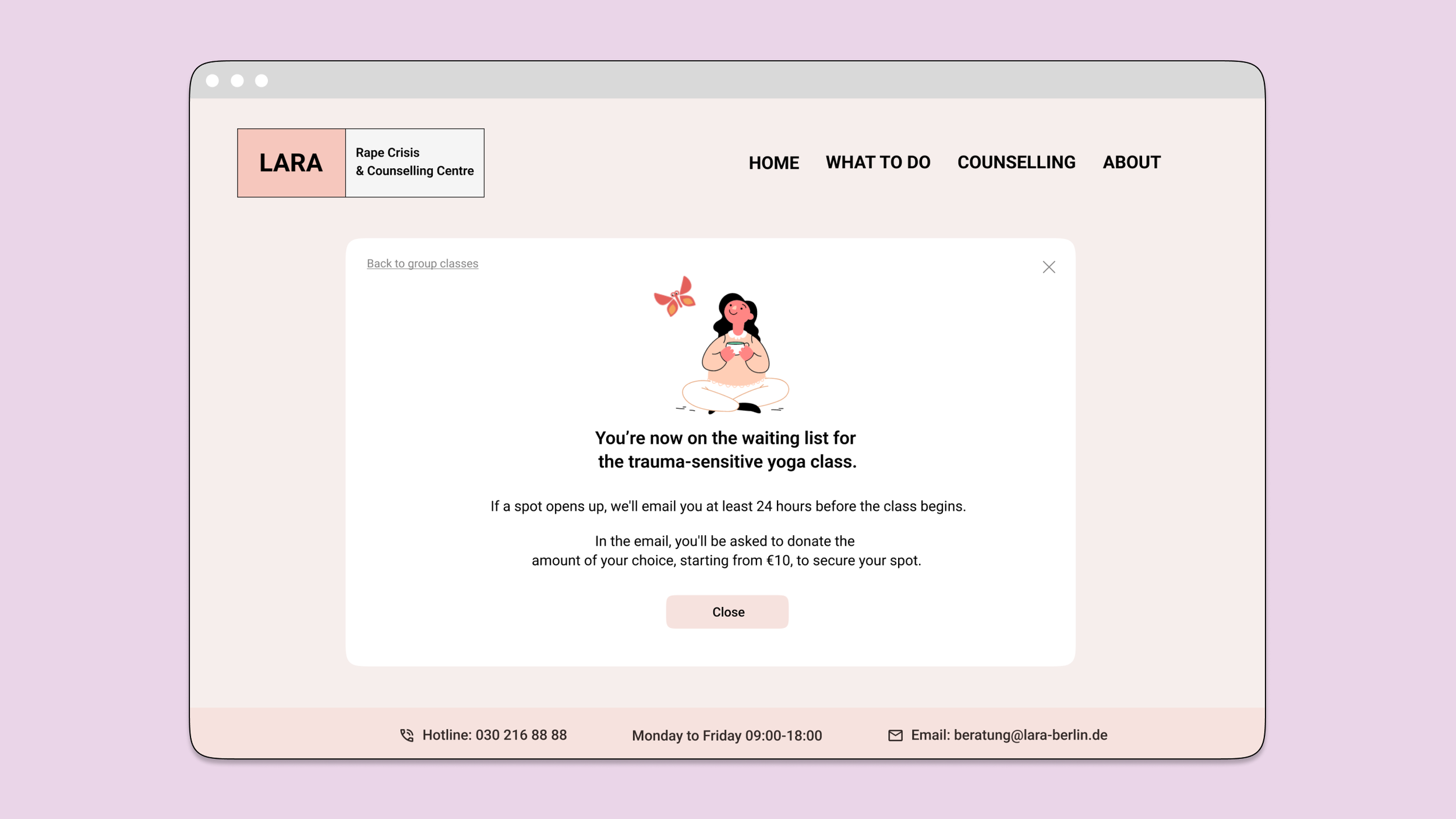
LARA: Waiting list confirmation screen
My process
Competitor & user research: I analyzed existing fitness booking systems and conducted surveys, interviews, and conversation mining to understand the specific anxieties of LARA’s demographic.
Persona development: I created detailed user personas to ensure the copy addressed various emotional states and levels of technical comfort.
Microcopy & style guide: I developed a custom content style guide focused on trauma-sensitive language, avoiding triggers while maintaining clinical credibility and warmth.
A/B testing for donations: I conducted split testing on the donation screen to see how different copy triggers and UI layouts influenced the user's willingness to contribute.
Iterative redesign: Based on testing reports, I refined the donation and registration screens to better balance the center's financial needs with the user’s emotional capacity.
Challenge
The core challenge was navigating the high-stakes nature of the service. Every word needed to be medically accurate yet emotionally soft. I had to design a system that collected necessary data (like names and contact info) without making the user feel surveilled or unsafe. Additionally, I had to solve the referral challenge, ensuring that men who landed on the page felt respected and supported even as they were redirected, maintaining LARA’s mission as a specialized space.
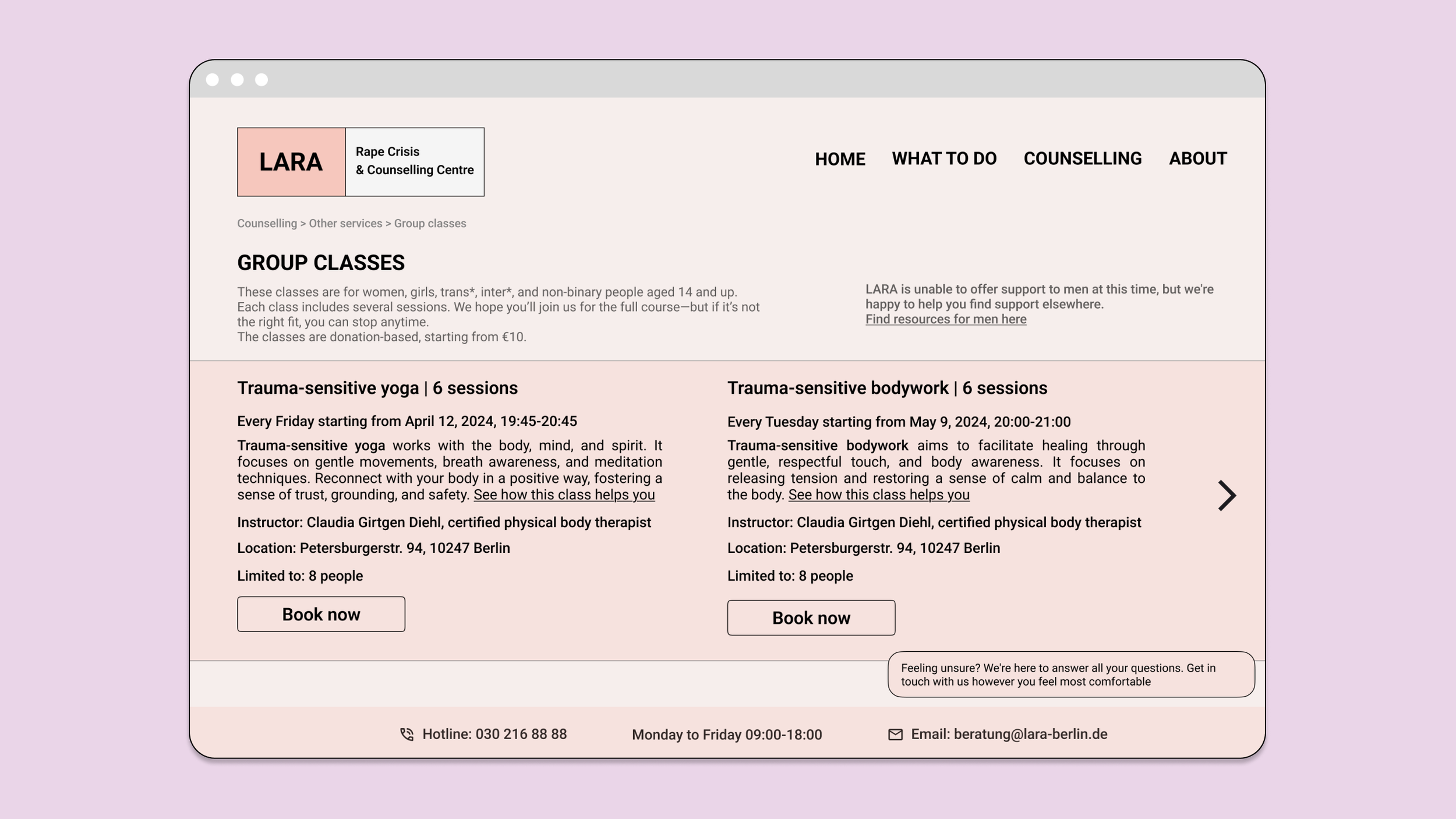
LARA: Screen of the group classes
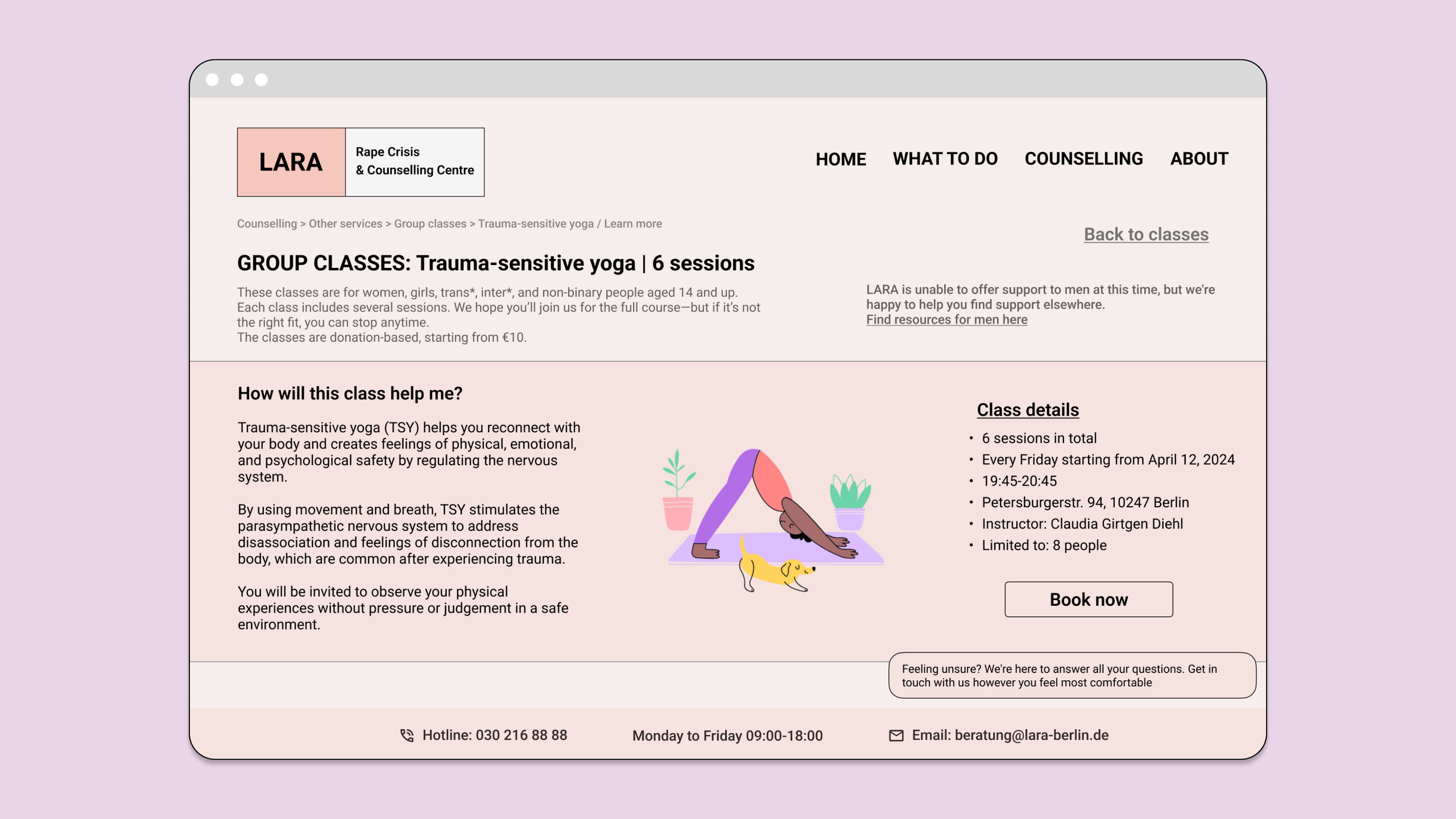
LARA: The screen appears once the user taps “See how this class helps you”
Results
While a spec project, the system was designed to fundamentally shift how LARA interacts with its community.
Reduced emotional friction: By offering a digital alternative to phone calls, the system lowers the barrier for survivors to access trauma-sensitive yoga and bodywork.
Increased administrative efficiency: For LARA staff, the automated waiting list and email reminders replace hours of manual coordination.
Enhanced privacy & control: Features like “first-name only" registration and easy cancellation give users a sense of agency over their personal information and schedule.
Next Steps
Privacy-first testing: Conducting qualitative interviews to see if users would prefer pseudonyms/usernames over first names to further enhance their sense of anonymity.
Communication preferences: Researching whether users prefer SMS, encrypted email, or app notifications for reminders to ensure their privacy isn't compromised by shared devices.
Payment flexibility: Testing "Pay in Cash" or "Pay Later" options on the donation screen to accommodate users who may not feel comfortable entering financial data online.
Long-term validation: Tracking the conversion from "viewing a class" to "attending" to see if the trauma-informed copy effectively reduces sign-up anxiety.